
Preparing for the hockey off season
You know us, we bloody love hockey.
The early mornings, the late nights, the smell of the kit bag that should’ve been binned three seasons ago… it’s all part of it. But just like that, the season wraps up, the skates get shelved, and the ice time disappears until Autumn rolls back around.
Now here’s the bit a lot of players get wrong…
They either do nothing… or they go full Rocky montage and burn themselves out by June.
Let’s do it properly.
The Off-Season Isn’t “Off” – It’s Your Advantage
The players who come back flying in September aren’t the ones who trained hardest for a week. They’re the ones who trained smart for months.
This is your window to:
Fix weaknesses
Build strength properly
Improve conditioning without game fatigue
Actually recover (aye, properly recover)
Think of it less as a break… and more as a rebuild.
Step 1: Recover Like You Mean It (First 2–3 Weeks)
Before you start chasing PBs, your body needs to calm down from a full season of impacts, sprints, and probably questionable decisions on a Saturday night.
Focus on:
Light movement (walking, cycling, swimming)
Mobility work (hips, ankles, thoracic spine especially)
Sorting niggles before they become injuries
Sleep… actual proper sleep
If something’s been nagging you all season, now’s the time to deal with it. Not ignore it and hope for the best.
Step 2: Build Strength That Actually Transfers to the Ice
Hockey isn’t just about being fit — it’s about being powerful.
Your priorities:
Lower body strength (squats, deadlifts, split squats)
Posterior chain (glutes, hamstrings — your skating engine)
Core stability (anti-rotation, not just crunches)
Upper body strength for battles along the boards
Keep it simple. Get stronger at the basics.
If you’re lifting properly now, you’re not just “in shape” later — you’re harder to knock off the puck.
Step 3: Conditioning Without Killing Yourself
Here’s where most players mess it up.
They either:
Run 5Ks and wonder why their legs feel dead
Or do nothing and gas out after one shift in pre-season
Hockey is short bursts, not marathons.
Focus on:
Interval training (bike, rower, sprints)
Short, high-intensity efforts (10–30 seconds)
Full recovery between efforts
Think: simulate a shift, not a jog round Kelvingrove.
Step 4: Mobility = More Speed (Yes, Really)
If your hips are tighter than your old shoulder pads, you’re leaving speed on the table.
Work on:
Hip flexors
Groin/adductors
Ankles
Thoracic rotation
Better mobility = deeper stride = more power = more speed.
No fancy gimmicks needed. Just consistency.
Step 5: Don’t Completely Bin the Fun
You don’t need to live like a monk.
Have a beer. Enjoy your weekends. Take a holiday.
But don’t completely switch off.
The goal is balance — not going from elite athlete to “I’ll start again in August.”
Step 6: Set a Target (Or You’ll Drift)
If you don’t have a goal, your off-season will drift quicker than a puck on fresh ice.
Set something like:
Increase squat by 20kg
Drop body fat by a few %
Improve beep test score
Fix a specific weakness (speed, endurance, strength)
Give yourself something to chase.
Final Thought
Anyone can turn up in September and say “I wish I’d done more.”
Very few turn up and think, “I nailed that off-season.”
Be the second one.
Because when the puck drops again in Autumn, you don’t want to be catching up…
You want to be setting the pace.
Get ready for next season with some fancy swag.

Indulge in the ultimate comfort and style with this premium quality T-shirt. Meticulously crafted from the finest double yarn cotton fabric, this tee offers unrivaled durability, ensuring it remains a wardrobe staple for years to come. The crew neck design exudes a classic touch, elevating its overall aesthetic to a new level of sophistication.
With a range fo 13 alluring color options, spanning from earthy neutrals to lively and bright tones, finding the perfect shade to suit your personal style has never been easier.
- Crew neck
- Drop shoulders
- Oversized fit
- 100% cotton
- 26S Compact Double Yarn
- Pre-shrunk
- Reactive-dyed for long-lasting color
- Fabric weight: 305g/m²
- Side-seamed construction
- Binding taped neck and shoulders
- Double-stitched ribbed collar
- Coverstitch cuffs and hem
Wash inside out in cold water on a gentle cycle with mild detergent. Do not bleach, soak, rub, or wring. Wash with like-colored garments. Hang dry and avoid direct sunlight. Iron, steam, or tumble dry at low temperature(max 30℃ or 90℉).
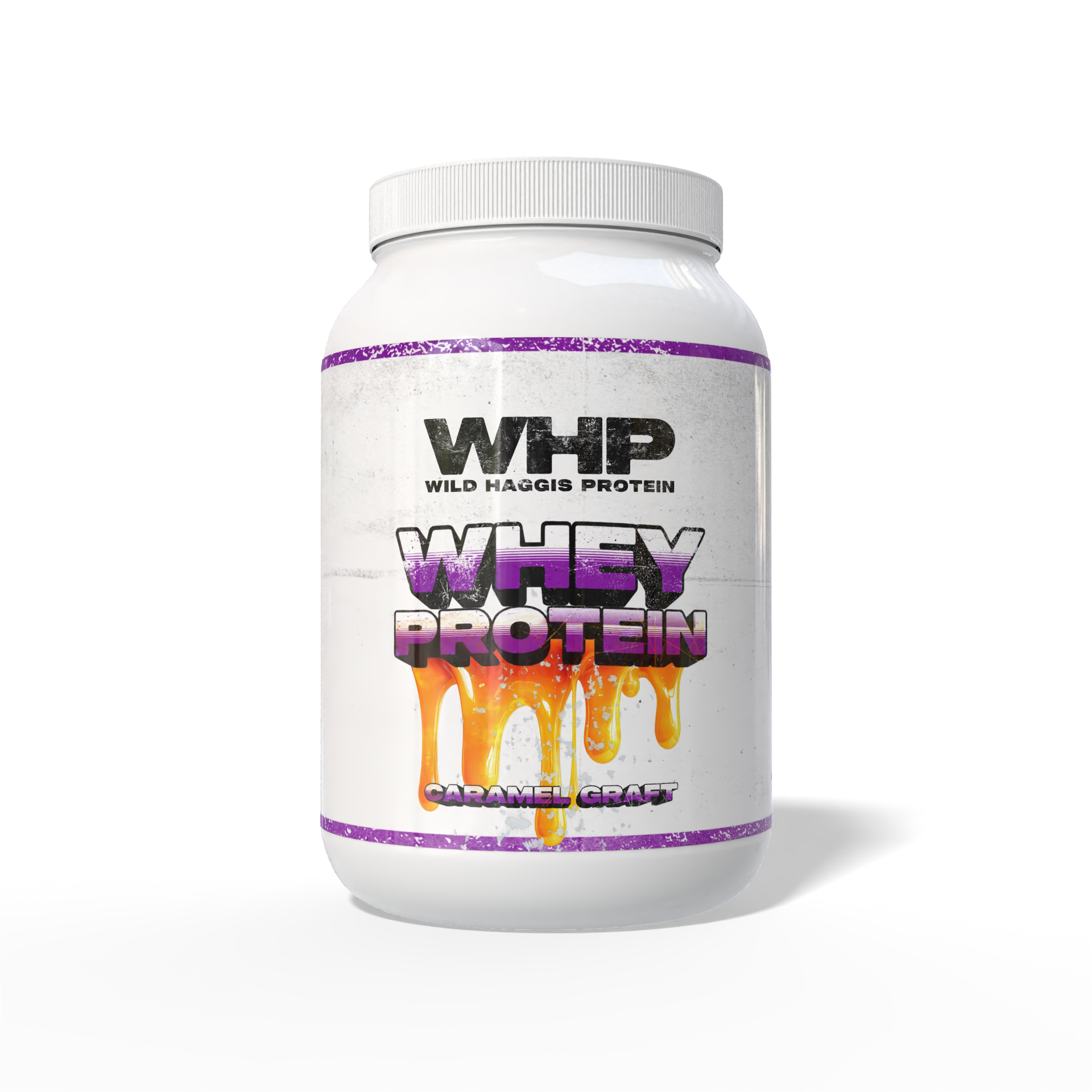
Introducing our new Whey Protein by Wild Haggis – the epitome of protein excellence! Get ready to embark on a protein-packed journey like never before with our meticulously crafted formula, promising an unparalleled protein experience that's both luxurious and robust. Indulge in a shake that boasts extraordinary thickness, a burst of flavours, and seamless compatibility with any milk variant – whether it's dairy, oat, or nut.
The secret to our exceptional formula lies in each 30g serving, delivering an impressive 21g of pure protein sourced exclusively from milk. More than just a supplement, our Whey Protein is designed as the ultimate post-workout shake, perfect for those seeking to elevate their protein intake and achieve optimal muscle growth and maintenance.
Why settle for ordinary when you can savour the extraordinary? Elevate your fitness routine with Whey Protein by Wild Haggis, where flavour meets function in perfect harmony. This is not just any protein; it's an experience, a revolution, and the pinnacle of protein perfection. Treat your body to the best with Whey Protein by Wild Haggis – because exceptional fitness deserves an exceptional protein partner.
INGREDIENTS: Whey Protein Concentrate (Milk), Milk Protein (Milk), Flavouring, Colour, Sweetener (Sucralose).
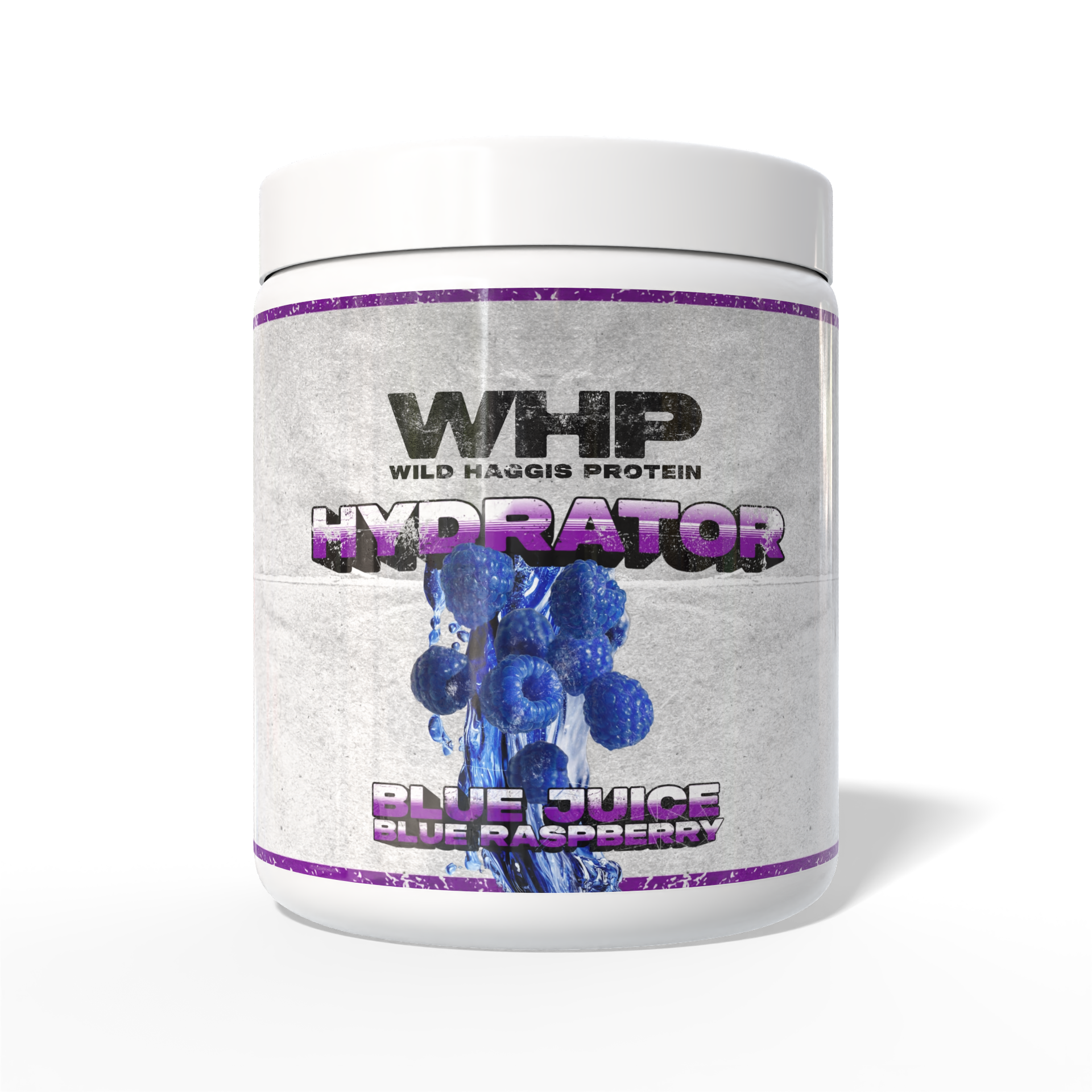
Introducing Hydrator Blend, your go-to for staying refreshed and energised during any workout or busy day. Designed with hydration-boosting ingredients, this formula is packed with essential vitamins and minerals to keep you performing at your best, no matter how hard you're pushing yourself.
Each tub contains 60 servings, ensuring long-lasting hydration support. Here’s what’s inside and why it matters:
- Coconut Water (1.5g): Naturally packed with electrolytes, coconut water helps replenish lost fluids and keeps your hydration levels balanced.
- Taurine (1g): Known for enhancing endurance and reducing fatigue, taurine supports overall performance during your training sessions.
- Potassium (395mg): Key to maintaining fluid balance and muscle function, potassium helps prevent cramps and keeps you moving.
- Pink Himalayan Salt (250mg): This natural salt is rich in minerals and helps retain hydration, preventing you from feeling drained.
- Magnesium (150mg): Plays a vital role in muscle recovery and energy production, reducing the risk of cramps and fatigue.
- Vitamin C (80mg): An antioxidant that supports immune health and aids recovery, perfect for staying in peak condition during and after intense sessions.
- Vitamin B3 (16mg): Also known as Niacin, B3 helps convert food into energy, supporting your metabolism and keeping you energised throughout the day.
With this well-rounded blend of ingredients, Hydrator Blend is formulated to keep you hydrated, energised, and ready to tackle whatever the day throws at you. Ideal for pre, during, or post-workout, it’s your reliable companion to help you stay at your peak!
INGREDIENTS: coconut water Powder, Taurine, Flavouring, Maltodextrin, Potassium Citrate, Pink Himalayan Salt, Citric Acid, Malic Acid, Magnesium Citrate, Ascorbic Acid (Vitamin C), Niacin (Vitamin B3), Colour, Sweetener (Sucralose)
